




Buying Guide
How to Buy an Air Purifier
This short guide helps you choose the right air purifier quickly. It covers the key things to check, the main types available, the most important specifications, where to buy and common buying mistakes, plus rapid expert tips so you can act with confidence.
What to consider first
Start with the room you want to treat - measure the floor area and note ceiling height.
Check the CADR or stated coverage so the unit can deliver at least 1 to 5 air changes per hour for that space. For bedrooms and small rooms a lower CADR is fine; for living rooms or open-plan areas aim for higher CADR values (many effective units sit in the 150 to 250 m3/h range).
Noise matters for night use - look for a sleep mode under 25 dB for bedrooms and under 20 dB if you are a light sleeper.
Factor in running costs: replacement filter frequency (commonly 3 to 12 months), energy use and warranty length.
Prefer models with clear certification (for example CE, RoHS, CARB or similar) and simple controls or app support if you want remote control.
Check the CADR or stated coverage so the unit can deliver at least 1 to 5 air changes per hour for that space. For bedrooms and small rooms a lower CADR is fine; for living rooms or open-plan areas aim for higher CADR values (many effective units sit in the 150 to 250 m3/h range).
Noise matters for night use - look for a sleep mode under 25 dB for bedrooms and under 20 dB if you are a light sleeper.
Factor in running costs: replacement filter frequency (commonly 3 to 12 months), energy use and warranty length.
Prefer models with clear certification (for example CE, RoHS, CARB or similar) and simple controls or app support if you want remote control.


Types and categories
Most air purifiers fall into a few practical categories:
- Compact desktop units - cheap and portable for single rooms or offices.
- Tower or cylinder HEPA purifiers - best for whole rooms and higher CADR performance.
- Large-room purifiers - designed for generous open-plan spaces, often with higher CADR and stronger fans.
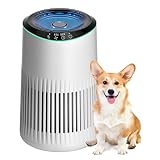
- Pet and allergy-focused models - include HEPA plus specialised prefilters or designs to capture hair and dander.
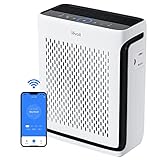
- Smart models - WiFi, app control and voice assistant compatibility for scheduling and remote monitoring.
- Combination units - HEPA plus activated carbon for odours, and sometimes an aromatherapy pad or nightlight for added comfort.
Features, specs to check and common mistakes to avoid
Key features to prioritise:
- True HEPA (H13 or better) if you need reliable removal of PM2.5, pollen and pet dander.
- Activated carbon layer for cooking smells, smoke and pet odours.
- Washable prefilter to trap hair and large particles and extend the life of the HEPA filter.
- CADR and coverage figures - match these to your room size rather than relying on general claims.
- Sensors and an accurate auto mode so the unit adapts to air quality changes.
- Timers, low-noise sleep mode and a clear filter-replacement indicator to reduce fuss.
- Buying an undersized unit - it will look fine but will not clean the air effectively.
- Ignoring filter availability and cost - cheap machines often have expensive, hard-to-find filters.
- Trusting unverified 'HEPA-type' claims - seek true HEPA specifications.
- Assuming instant removal of odours - some smells need time or a carbon-rich filter to be removed.
- Choosing models with ionisers or UV without checking ozone safety - these can produce unwanted by-products unless proven ozone-free.

Where to buy and quick expert tips
Online retailers give the best range and price comparison; retail stores let you listen to noise levels and check build quality in person.
Before buying online check delivery times, returns policy and whether genuine replacement filters are sold separately. Look for verified reviews and photos from purchasers rather than relying on promotional copy.
Fast expert tips:
Before buying online check delivery times, returns policy and whether genuine replacement filters are sold separately. Look for verified reviews and photos from purchasers rather than relying on promotional copy.
Fast expert tips:
- For a bedroom choose a unit with a sleep noise level under 25 dB and timer options.
- If you have pets pick HEPA plus a strong carbon layer and a washable prefilter.
- For large open-plan spaces aim for CADR above 200 m3/h or coverage matching the room area in m2.
- Keep the purifier clear of obstructions and place it away from walls for best circulation.
Final Thoughts
Match capacity and CADR to your room size, prioritise true HEPA and carbon filtration, check ongoing filter costs and noise levels, and buy from a seller who offers clear returns and genuine replacement parts. Follow the quick tips above to pick a practical, long-lasting unit and get cleaner air fast.


