


Buying Guide
How to Buy Bluetooth Tracker Tags
This short guide helps you choose the right Bluetooth tracker tags for keys, wallets, luggage and more. It covers the main buying factors, the common types available, the technical features to check and practical tips for buying online or in store.
Key factors to consider
Phone compatibility and network support are the first things to check. Some tags work only with a particular phone ecosystem while others claim cross-platform support but can only pair with one phone at a time.
Battery type and life matter for convenience - rechargeable tags remove the need to replace batteries, while coin-cell tags often last many months and are easy to swap.
Range, sound level and waterproofing determine real-world usefulness: look for a clear advertised Bluetooth range, a loud buzzer (80 to 100 dB is common) and at least IP67 if you plan to use the tag outdoors.
Privacy and security: make sure the vendor uses encrypted updates and a recognised crowd‑locating network so lost items can be found by nearby devices without exposing your data.
Battery type and life matter for convenience - rechargeable tags remove the need to replace batteries, while coin-cell tags often last many months and are easy to swap.
Range, sound level and waterproofing determine real-world usefulness: look for a clear advertised Bluetooth range, a loud buzzer (80 to 100 dB is common) and at least IP67 if you plan to use the tag outdoors.
Privacy and security: make sure the vendor uses encrypted updates and a recognised crowd‑locating network so lost items can be found by nearby devices without exposing your data.

Types and categories
- Single-ecosystem tags: designed for one phone operating system only.
- Dual‑system tags: advertise compatibility with multiple ecosystems but generally pair to one device at a time.
- Rechargeable tags: charge via USB-C and suit users who prefer not to replace coin cells.
- Replaceable battery tags: use common coin cells such as CR2032 and often give 12 months or more of life.
- Ruggedised tags: higher IP rating for travel and outdoor use.
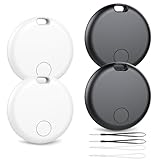
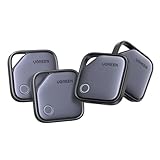
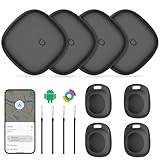
- Multi-packs: economical sets of 3 to 4 for home or family use.
Important features and specifications to check
Compatibility: confirm it supports your phone's OS and the required app. Some products require a minimum OS version.
Battery: rechargeable via USB-C or replaceable coin cell; check claimed life (examples range from about 12 months to 2 years depending on use).
Alarm loudness: aim for at least 80 dB for finding items in sofas or drawers; over 100 dB is easier to hear in busy places.
Bluetooth version and range: newer Bluetooth 5.x gives better range and stability; stated ranges vary, typical useful indoor range is tens of metres.
Waterproof rating: IP67 is common and suitable for rain and brief immersion.
Lost-mode and crowd network: a large device network increases the chances of locating items far away; ensure the product supports anonymous, encrypted reporting.
Pairing limits and sharing: check whether the tag can be shared with family and whether it can be paired to more than one phone at once.
Physical: size, weight and attachment options affect where you can fit the tag.
Battery: rechargeable via USB-C or replaceable coin cell; check claimed life (examples range from about 12 months to 2 years depending on use).
Alarm loudness: aim for at least 80 dB for finding items in sofas or drawers; over 100 dB is easier to hear in busy places.
Bluetooth version and range: newer Bluetooth 5.x gives better range and stability; stated ranges vary, typical useful indoor range is tens of metres.
Waterproof rating: IP67 is common and suitable for rain and brief immersion.
Lost-mode and crowd network: a large device network increases the chances of locating items far away; ensure the product supports anonymous, encrypted reporting.
Pairing limits and sharing: check whether the tag can be shared with family and whether it can be paired to more than one phone at once.
Physical: size, weight and attachment options affect where you can fit the tag.

Where to buy and expert tips
Online retailers offer the widest selection and price comparison; look for clear return policies and verified reviews.
High-street shops let you test pairing and sound in person before buying.
Common mistakes to avoid:
High-street shops let you test pairing and sound in person before buying.
Common mistakes to avoid:
- Buying without checking OS compatibility or minimum OS version.
- Assuming cross-platform means simultaneous pairing.
- Ignoring battery type and how easy it is to replace or recharge.
- Overlooking sound volume and waterproof rating for your use case.
- If you dislike swapping batteries, choose a USB-C rechargeable model; if you want long standby and easy replacement, choose a CR2032 coin cell model.
- Buy a multi-pack if you have several items to protect; it is usually more cost effective.
- Test pairing and alarm volume as soon as you receive the tag and keep firmware and the app up to date.
- Check seller returns and warranty so you can replace defective units quickly.
Final Thoughts
Decide first which phone ecosystem you need the tag to work with, then pick between rechargeable and replaceable battery types. Prioritise real-world features such as alarm loudness, waterproofing and crowd network support. Buy from a seller with a clear returns policy and test new tags straight away to make sure they pair and sound as expected.