



Buying Guide
How to Buy a Jump Starter Power Pack
A compact jump starter power pack with built in air compressor is a versatile roadside essential. This short guide explains the key things to check, the main types available, which specifications matter, where to buy and common pitfalls to avoid so you can choose quickly and with confidence.
What to consider before you buy
Engine size and vehicle type matter most. Look for a peak current rating that suits your vehicle: units in the 5,000A to 8,000A range cover most cars, large petrol engines and heavier diesel or hybrid vehicles.
Think about how you will use it. If you want to inflate tyres frequently, choose a unit with a 150 to 160 PSI pump, an auto shut off and a fast flow rate (around 40 to 45 L/min).
Decide whether the unit must also be a power bank. Battery capacities seen here range from around 10,000mAh up to 26,800mAh. Higher capacity gives more phone charges and multiple tyre inflations but costs more and adds weight.
Check safety and durability. Look for multiple protection circuits (reverse polarity, short circuit, overcharge, overcurrent, temperature protection), a robust shell and rated flame resistance for peace of mind.
Set a realistic budget. Practical models from the data sit in the roughly £50 to £90 range depending on capacity and extras.
Think about how you will use it. If you want to inflate tyres frequently, choose a unit with a 150 to 160 PSI pump, an auto shut off and a fast flow rate (around 40 to 45 L/min).
Decide whether the unit must also be a power bank. Battery capacities seen here range from around 10,000mAh up to 26,800mAh. Higher capacity gives more phone charges and multiple tyre inflations but costs more and adds weight.
Check safety and durability. Look for multiple protection circuits (reverse polarity, short circuit, overcharge, overcurrent, temperature protection), a robust shell and rated flame resistance for peace of mind.
Set a realistic budget. Practical models from the data sit in the roughly £50 to £90 range depending on capacity and extras.
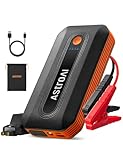

Types and who they suit
- Basic jump starter: compact and affordable, great for small cars and occasional use. Look for 3,000A to 5,000A peak current.
- All-in-one jump starter with inflator: includes tyre pump (150–160 PSI), digital display and nozzles. Best for motorists who want a single roadside kit.
- High-capacity power bank jump starter: 20,000mAh+ with fast USB-C PD output. Ideal if you need to charge laptops or run 12V appliances as well.
- Professional/rescue grade: highest peak current (6,000A+), force start function and more accessories. Suited to larger diesels, vans and commercial use.
Key features and specifications to check
Peak current and vehicle compatibility: match the peak amp rating to your vehicle. 5,000A models will start most cars and smaller diesels; 6,000A to 8,000A is better for larger diesel engines and hybrids.
Jump start safety features: spark proof clamps, reverse polarity protection and an explicit forced start or boost mode for deeply discharged batteries.
Inflator specs: look for 150–160 PSI capability, auto shut off at preset pressure, multiple nozzles and a detachable extended hose (around 50–60cm is useful).
Battery capacity and outputs: 10,000mAh for basic phone top ups; 20,000mAh+ for multiple charges and powering accessories. Check USB-C PD, bi directional charging and any high wattage 12V outputs if you plan to run devices.
Display and lighting: clear LED or LCD screen for tyre pressure and battery status; 500–600 lumen LED lights with steady, strobe and SOS modes greatly improve safety at night.
Accessories and service: ensure the kit includes heavy duty clamps, extra nozzles, charging cables, carry case and preferably insulated gloves. Check warranty and after sales support.
Jump start safety features: spark proof clamps, reverse polarity protection and an explicit forced start or boost mode for deeply discharged batteries.
Inflator specs: look for 150–160 PSI capability, auto shut off at preset pressure, multiple nozzles and a detachable extended hose (around 50–60cm is useful).
Battery capacity and outputs: 10,000mAh for basic phone top ups; 20,000mAh+ for multiple charges and powering accessories. Check USB-C PD, bi directional charging and any high wattage 12V outputs if you plan to run devices.
Display and lighting: clear LED or LCD screen for tyre pressure and battery status; 500–600 lumen LED lights with steady, strobe and SOS modes greatly improve safety at night.
Accessories and service: ensure the kit includes heavy duty clamps, extra nozzles, charging cables, carry case and preferably insulated gloves. Check warranty and after sales support.

Where to buy, mistakes to avoid and expert tips
Where to buy: online retailers offer the widest choice and prices from around £50 to £90. Buy from sellers with strong reviews, clear return policies and seller support. High street retailers let you inspect build quality and get immediate replacement if faulty.
Common mistakes to avoid:
Common mistakes to avoid:
- Buying a unit with insufficient peak current for your engine.
- Assuming advertised capacity equals usable capacity. Look for true rated capacity and real world specs.
- Ignoring safety protections and missing accessories like sturdy clamps or a long air hose.
- Leaving the unit flat in the car. Keep it topped up and check charge monthly.
- Practice using the clamps and controls at home so you are confident in an emergency.
- Prefer units with clear displays and auto shut off on the inflator to prevent over inflation.
- Choose a unit with a force start or boost button if your vehicle may have deeply discharged batteries.
- Keep the unit in a dry carry case, note the operating temperature range and register the warranty on purchase.
Final Thoughts
Pick a unit that balances peak current, battery capacity and inflator performance for your needs. For everyday motorists a 5,000A–6,000A all-in-one with 150 PSI pump and basic power bank is a sensible choice. For larger diesels or commercial use step up to 7,000A–8,000A and higher capacity. Buy from a reputable seller, check the safety protections and accessories, and keep the unit charged so it is ready when you need it.


