



Buying Guide
How to Buy Cordless Brad Nailers and 2-in-1 Nail/Staple Guns
This short guide helps you choose a cordless brad nailer or a combined nail and staple gun. It covers the most important factors, the main product types, the must-have features and specifications, where to buy and practical tips to avoid costly mistakes.
Key factors to consider
Decide the jobs you will do most often. Trim, skirting, furniture and upholstery need different power and fastener sizes than decking or heavy joinery. Check these quick facts from the market: voltage typically 18V or 20V, shot rate around 40 to 60 impacts per minute, magazine capacity up to 100 fasteners and common fastener sizes 15 to 32 mm (3/4" to 2"). Typical prices range from about £70 to £150. Important checklist:
- Power source and battery system - is the tool sold as a bare tool or as a kit with battery and charger?
- Fastener compatibility - gauge (commonly 18GA), and length range you need.
- Work rate - shots per minute and battery runtime (some 2,000 mAh batteries claim thousands of shots).
- Weight and ergonomics - lighter tools are easier for prolonged use; note heavy kits can weigh around 2.5 to 3 kg with batteries.
- Safety features - contact safety, depth adjustment and LED lights for accuracy.


Types and who they suit
There are a few practical types to choose from:
- Single-function cordless brad nailers - best for trim, mouldings and finishing where 18GA brads are used.
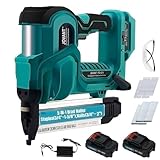
- 2-in-1 brad nailer and staple gun - versatile for upholstery, folding work and light carpentry where both staples and brads are handy.
- Bare tool only - good if you already own a compatible lithium battery platform; cheaper but you will need a battery and charger.
- Complete kit - includes batteries, charger and sometimes a case plus starter fasteners; best if you do not already have a battery system.
Must-have features, specs and common mistakes
Prioritise the features that save time and improve finish quality:
- Depth adjustment - essential for clean countersinking without splitting thin trims.
- Single and sequential fire modes - single for precision, sequential for speed.
- Contact safety and jam-release - reduces accidental firing and makes clearing jams easier.
- LED work light - helps when working in shadowed areas.
- Magazine capacity and visible level indicator - reduces interruptions and prevents overloading.
- Battery capacity and charging time - a 2,000 mAh pack on similar tools can deliver many shots and may charge in about an hour.
- Buying without checking whether a battery and charger are included.
- Assuming all batteries are cross-compatible; check the exact platform and connector type.
- Using the wrong gauge or too-long fasteners for the material, especially on hardwoods.
- Overlooking safety features and ergonomic comfort to save a small amount up front.

Where to buy and expert buying tips
Choose between online and local retailers based on returns, availability and aftercare. Online stores often show stock messages and bundle savings; local shops let you test weight and balance before purchase. Practical tips to act on now:
- If you do not own a compatible battery, buy a kit rather than a bare tool to get going straight away.
- Buy at least one spare battery if you expect extended work sessions.
- Check included accessories - many packs include sample nails and staples which save a first purchase.
- Read warranty and return terms and note whether the supplier lists limited stock (buy sooner if stock is scarce).
- On arrival, test the tool on scrap timber and adjust depth before starting the job. Always wear eye protection and follow the user manual for safe operation.
Final Thoughts
Focus first on the jobs you will do and whether you already have a compatible battery system. Prefer tools with depth adjustment, reliable safety features and clear fastener compatibility. If you do not own batteries, buy a kit; if you do, a bare tool can save money. Finally, buy from a seller with clear returns and warranty terms and test the tool on scrap wood before you begin.


