



Buying Guide
How to Buy a Cordless Combi Drill
This short guide helps you pick a cordless combi drill that suits your needs. It covers the main buying factors, the common types you will see, the key specifications to check, where to buy and practical tips to avoid costly mistakes.
Key factors to consider
- Purpose: occasional home repairs, regular DIY or professional work will determine the power and durability you need.
- Power and runtime: voltage and battery capacity matter - 18V is common; batteries range from about 1.5Ah to 2.0Ah or larger. Twin-battery packs extend runtime.
- Versatility: look for combi drills with both drilling and hammer modes if you will work in masonry as well as wood and metal.
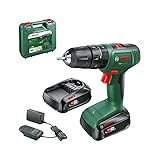
- Accessories and kit: decide if you want a bare tool or a kit with charger, case and bit sets. Kits save money but check the quality of included bits.
- Ergonomics and weight: a soft-grip handle and a lightweight design reduce fatigue for overhead and extended tasks.


Types and who they suit
- Compact combi drill - Best for light DIY and tight spaces; prioritise low weight and compact size.
- Standard combi drill with hammer action - Good all-rounder for homeowners who will drill into wood, metal and occasional masonry.
- Value kits with twin batteries and accessories - Ideal if you want immediate versatility and longer runtime out of the box.
- High-torque combi - Suited to frequent or heavy-duty fastening; look for higher N.m ratings and multi-speed gearboxes.
Important features and specifications to check
- Voltage and battery count - 18V is widespread; two batteries are useful for continuous work. Check battery capacity (1.5Ah, 2.0Ah etc) and charging time (some chargers take around 90 minutes, others longer).
- Torque and clutch settings - Manufacturers offer clutch ranges from about 10 to 25 positions; higher torque figures (for example around 40 N.m) help with heavy screws.
- Speed ranges - Two-speed gearboxes commonly offer a low, high range. Typical no-load speeds run from a few hundred RPM up to around 1 800 RPM.
- Hammer performance - If you need masonry work check hammer beats per minute and stated masonry drill capacity (some tools list up to 10mm for masonry).
- Chuck type and size - A 10mm (3/8") keyless or auto-lock chuck is the most common and makes bit changes quick.
- Extras - LED work light, battery charge indicator, metal gearbox or reinforced motor, sturdy kitbox and the quality of included bits and sockets.

Where to buy, common mistakes and quick tips
- Online vs retail - Online often has better prices and more kit options. Retail lets you test weight and grip and get immediate advice. Check seller ratings and return policies either way.
- Common mistakes to avoid - Buying on price alone; assuming a single battery is enough; overlooking charger time and battery health; trusting accessory counts without checking bit quality.
- Expert tips - Prefer a two-speed gearbox and at least 20 clutch settings for versatility. Buy a twin-battery kit if you work for more than short bursts. Look for a 10mm keyless chuck, an LED light and a battery indicator. Check warranty and how easy batteries are to replace. If you need masonry capability, confirm hammer mode specs and max masonry drill size.
- Practical buying cue - Expect decent new combi drills and kits in the mid-40s to mid-50s pounds price band; pay a little more for extra batteries or a stronger torque spec you will actually use.
Final Thoughts
Choose a combi drill that matches how often and what you will drill. For most homeowners an 18V combi with a two-speed gearbox, 10mm chuck, LED and at least one spare battery gives the best balance of value and performance. Check charger time, clutch positions and kit contents before buying and favour sellers with clear returns and warranty terms.


