




Buying Guide
How to Buy a Home Dehumidifier
This short guide helps you pick a dehumidifier that suits your room size, budget and needs. It covers what to check, the main types available, the key specifications to compare, where to buy and common mistakes to avoid so you can act quickly and confidently.
Key factors to consider
Choose by room size and problem severity. For single rooms with moderate damp, a unit that extracts around 10 to 12 litres a day is usually adequate. Check the water tank size - many compact units have 1.8 to 2 litre tanks which will need emptying frequently unless you use a continuous drain. Consider noise if you plan to run the unit in a bedroom or home office; look for models rated in the mid 30s to low 40s dB. Think about running cost - energy-efficient compressors can cost from about 5p to 7p per hour. Finally, note the lowest operating temperature if you plan to use the dehumidifier in a cold basement or garage.


Types available and when to choose them
- Compressor dehumidifiers - best for general home use and laundry drying. They extract a lot of moisture for the size and are energy efficient in normal home temperatures.
- Desiccant dehumidifiers - better in very cold spaces below about 5 degrees, but quieter and usually more expensive to run in everyday conditions.
- Portable compact units - ideal for bedrooms, bathrooms and small cupboards; expect smaller tanks and wheels for easy movement.
- Larger or continuous-use units - choose these if you need to protect basements, garages or to run 24/7; look for continuous drain and higher daily extraction rates.
Important features and specifications to check
- Daily extraction rate (litres/day) - pick according to room size and damp level; 12 litres/day is common for medium rooms.
- Tank capacity and drainage - a 1.8 to 2 litre tank is compact but consider a removable hose or continuous drainage for longer runs.
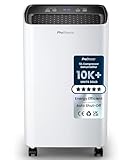
- Noise level - aim for around 36 to 42 dB for bedroom use; lower is better for night-time operation.
- Humidity control and timer - an automatic humidity sensor and 24-hour timer save energy and prevent over-drying; look for a settable target between roughly 30 and 80% RH.
- Special modes - laundry or continuous drying mode speeds up clothes drying without using central heating.
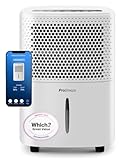
- Smart features and controls - some units offer app or voice control for convenience, but only buy these if you need remote operation.
- Filters and maintenance - washable dust filters and easy-empty tanks reduce running hassle.
- Operating temperature - check the minimum operating temperature if you plan to use the unit in a cold room; some models work down to about 5 degrees Celsius.
- Safety and auto-shutoff - automatic shutoff when the tank is full and overflow protection are essential.

Where to buy, common mistakes and quick tips
- Online buying - best for price comparison, reading many reviews and checking detailed specs quickly. Look for sellers with good returns and delivery options.
- In-store buying - useful to check build quality, weight and sound in person before you buy; retailers may also offer immediate pick-up.
- Common mistakes to avoid - buying a unit that is too small for the space, ignoring noise ratings, forgetting to check the minimum operating temperature, and assuming a small tank means low maintenance needs.
- Quick expert tips - place the unit near the damp source for fastest results, use continuous drainage for long dehumidification runs, set humidity to around 45% for comfort and mould prevention, and use laundry mode instead of a tumble dryer to save energy.
- After purchase - register the warranty, keep the filter clean and store the unit upright. Compare running cost estimates rather than only looking at purchase price.
Final Thoughts
Pick a compressor dehumidifier of about 10 to 12 litres/day for most rooms, prioritise quiet operation, continuous drainage and automatic humidity control. Buy online for best prices and reviews, visit a shop if you want to test noise and build, and avoid undersizing the unit. Set it to 40 to 50% relative humidity and use laundry mode to get the most value from your purchase.


