



Buying Guide
How to Buy a Portable Electric Space Heater
This short guide explains what to check when buying a portable electric space heater. It highlights the factors that affect warmth, safety and running cost, describes the main types on offer, and gives quick tips so you can pick the right model fast.
Key factors to consider
Choose by room size and power - small bedrooms and offices usually need around 1 000-1 500W, larger or poorly insulated rooms benefit from 1 800-2 000W.
- Heating performance: look for PTC ceramic or fan-assisted designs for fast warm-up.
- Noise: models under 40dB are suitable for bedrooms and study spaces.
- Energy control: a thermostat and an ECO mode cut running costs by adjusting output automatically.
- Safety: required features include tip-over and overheat protection and an automatic shut-off for long use.
- Practicality: consider weight, carry handle, cord length and whether the unit oscillates to spread heat.

Types available
There are a few common categories to match how and where you plan to use the heater.
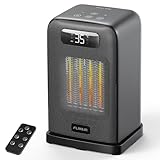
- Compact desk or tower ceramic heaters - small footprint, quick heat for personal spaces.
- Oscillating tower heaters - wider coverage for living rooms thanks to 70-90 degree oscillation.
- High-power fan heaters - often 1 800-2 000W for garages, workshops and larger rooms.
- 2-in-1 units with fan-only mode - useful in summer for air circulation as well as heating in winter.
Important features and specifications to look for
Prioritise these features when comparing products.
- Heating element: PTC ceramic is fast and efficient.
- Power settings: multiple wattage levels (for example 900W, 1 100W, 1 500W or 2 000W) let you balance warmth and energy use.
- Thermostat and ECO mode: automatic regulation keeps temperature steady and saves energy.
- Timers and remote control: 1-24 hour timers and a remote make use easy and prevent wasted energy.
- Oscillation angle and airflow: wider angles improve room coverage; look for claims of 70-90 degrees if you want even distribution.
- Noise level: below 40dB is quiet enough for sleeping or focused work.
- Safety certifications and materials: V0-rated flame retardant materials, CE marking and robust cord and plug are important.
- Extras: washable filter, adjustable angle foot, hidden carry handle and auto shut-off after long continuous use are useful additions.
- Budget guide: basic compact heaters can start under £35; mid-range oscillating or higher wattage models commonly sit around £45-65.

Where to buy, common mistakes to avoid and expert tips
Online stores give wider choice and user reviews while local retailers let you see size and build before buying. Check delivery, returns policy and warranty.
- Common mistakes to avoid: do not use a heater in a bathroom unless it is rated for that environment; avoid plugging high-power heaters into thin extension leads; do not leave unguarded heaters close to curtains or furniture.
- Quick expert tips: choose a slightly higher wattage than calculated for poorly insulated rooms; use ECO mode and the thermostat rather than full power to save on bills; place oscillating units centrally to spread heat; clean or replace filters and keep vents clear to maintain efficiency.
- Final buying checks: confirm tip-over and overheat protection, timer functions, dB rating for noise, and that the seller offers a straightforward returns process.
Final Thoughts
Pick a heater that matches the room size and your noise tolerance, prioritise safety features and a thermostat with ECO mode, and avoid cheap units without protection or proper cord rating. If you need quick warmth for a small room choose a 1 000-1 500W ceramic model; for larger spaces opt for 1 800-2 000W with oscillation and timer controls.


