



Buying Guide
How to Buy Kitchen Rugs and Runners
This short guide explains what to check when choosing kitchen rugs and runners so you can pick a safe, comfortable and easy to maintain option. It covers the main buying factors, types available, key specifications to compare, and practical buying tips to help you act quickly.
What to consider before you buy
Decide the primary function first - do you need absorbency, anti-slip protection, anti-fatigue comfort for long periods standing, or purely decoration. Measure the space in centimetres and allow a 2 to 5 cm margin so the mat does not block doors or appliances. Think about floor type - polished tile, wood or vinyl need a strong non-slip backing while textured floors may work with lighter backing. Factor in cleaning: machine washable textiles are easier to keep fresh; wipe-clean foam or leatherette mats suit greasy splash zones.


Types and where they work best
- Low-pile absorbent runners - thin polyester or microfibre runners for spill protection and quick drying; good in front of sinks and worktops.
- Anti-fatigue foam mats - slow-rebound PVC or foam topped with oil-proof surface for comfort during long cooking sessions; best at cooking islands or at sinks.
- Rubber or TPR-backed decorative runners - patterned, washable runners offering grip and floor protection for hallways and entrances.
- Leatherette/wipe-clean mats - waterproof, oil-resistant tops that are easy to wipe; ideal where grease and spills are frequent.
Key features and specifications to check
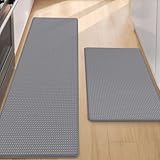
Look for explicit dimensions and thickness - common sizes in sets include short+long pairings such as approximately 40x60cm and 40x120cm or single runners near 43x150cm or 44x150cm. Check backing material - rubber, TPR or silicone backing gives strong grip; foam-backed mats are anti-slip but may need a dry surface. Note thickness - around 0.8 cm is typical for textile runners, while anti-fatigue mats are thicker for cushioning. Confirm wash instructions and colourfastness - machine washability and fade resistance are important for long-term use. Check claims like oil resistance and waterproof top if you often spill greasy liquids.

Where to buy, common mistakes to avoid and expert tips
Online shopping gives more size and colour options; check product images for scale, read dimensions and look for stock availability. In-store buying lets you feel texture and test grip. Common mistakes to avoid: buying by guess without measuring, choosing a mat with poor backing for wet areas, assuming all washable mats are machine-safe, and picking high pile mats where spills are likely. Expert tips:
- Measure and mark the area on the floor before ordering so you pick the right runner length and width.
- Prefer washable textiles or wipe-clean surfaces for kitchens; avoid bleach and follow care labels.
- If you stand for long periods choose a thicker anti-fatigue option; combine a thin runner and a foam mat where needed.
- Place mats on clean, dry floors for best grip and consider a thin anti-slip underlay for extra stability on smooth surfaces.
- Check return policy and product images that show exact measurements rather than approximate product shots.
Final Thoughts
Measure first, decide the main function, and pick backing and material suited to your floor and cleaning routine. Choose washable or wipe-clean options for messy kitchens and a cushioned mat if you stand a lot. Buy from retailers that list clear dimensions, materials and care instructions so you can return or exchange if it does not fit or perform as expected.


