





Buying Guide
How to Buy a Kitchen Bin
This short guide helps you choose a kitchen bin quickly and confidently. It covers the key things to check, the main types on the market, must-have features, where to buy and practical buying tips based on typical products available today.
Key factors to consider
Consider these points first
- Capacity: choose by household size. Around 50 litre suits a family of three or more; 30 litre works well for couples or tight spaces.
- Footprint and shape: rectangular bins save space beside units; round bins are easier to roll about.
- Material and finish: stainless steel is durable and often fingerprint resistant; polypropylene is light and cheap but may mark quicker.
- Lid mechanism: pedal is reliable and inexpensive; sensor bins give hands-free operation but need batteries and more maintenance.
- Practicality: look for a removable inner bucket with handles and a bag retainer to make changing liners quick and tidy.
- Budget and value: expect to pay roughly £30 to £60 for good midrange options, sometimes including a small pack of liners.


Types and who they suit
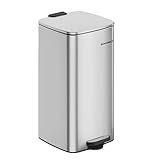
- Pedal bin with soft-close lid: classic choice, quiet and robust. Good for most kitchens.
- Sensor bin: touch-free convenience and hygiene. Best for cooks who prioritise cleanliness and do not mind replacing batteries.
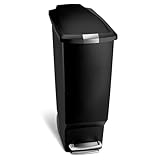
- Slim rectangular bin: ideal for narrow gaps and under counters.
- Compact bathroom bin: smaller capacity and lighter weight for cloakrooms and en suites.
Important features, specifications and common mistakes
Look for these features when comparing models
- Capacity in litres and external dimensions so you avoid surprises.
- Removable inner bucket with handles and a bag fixing point to keep liners hidden and secure.
- Soft-close lid to reduce noise and wear.
- Non-slip base or pads to prevent tipping, especially in homes with pets.
- Finish that resists rust and fingerprints if appearance matters.
- For sensor models check battery type, expected life and whether there is an on/off switch.
- Buying by capacity alone without checking external dimensions and clearance for the lid.
- Assuming all liners fit; check liner type and retainer system.
- Choosing a sensor bin without budgeting for batteries or expecting the same longevity as a simple pedal bin.
- Overlooking how easy the inner bucket is to lift and clean.

Where to buy and expert tips
Online shopping gives greater choice and price comparisons; retail stores let you test the pedal, see the finish and assess weight.
Top practical tips
Top practical tips
- Measure the floor space and lid clearance before you buy.
- Choose rectangular if you need to save space next to units.
- If noise is a concern pick soft-close models and test the mechanism in store where possible.
- Prefer an inner bucket with a bag hole and side handles for fast liner changes.
- For sensor bins check for an on/off switch and straightforward battery access.
- Check return policies, delivery charges and warranty before purchase and look for listings that include a few liners if you want immediate use.
Final Thoughts
Make a short checklist before you buy: measure the space, decide capacity, choose pedal or sensor, check inner bucket and bag fit, and review returns and warranty. For most kitchens a 30 to 50 litre pedal bin with a soft-close lid and removable inner bucket offers the best balance of convenience, hygiene and value.


