


Buying Guide
How to Buy a Kitchen Utensil Set
This short guide explains what to look for when buying a kitchen utensil set. It covers the main buying factors, the common types available, key features and specifications, where to buy, mistakes to avoid and quick expert tips so you can decide fast and confidently.
What to consider first
Decide how you cook and how much storage you have. If you cook every day and use a mix of frying, boiling and baking, choose a larger set with specialised tools. If you have limited space, a compact 8 to 12 piece kit will cover essentials. Consider budget: good stainless sets in the examples sit around £19 to £25. Think about compatibility with your cookware and maintenance preferences, for example whether you want dishwasher-safe items or prefer handwashing to prolong life.


Types and what they include
- Compact essentials (8 to 12 pieces): basic spoons, turner, tongs and a ladle. Good for small kitchens and minimalists.
- Standard sets (10 to 15 pieces): add a whisk, spaghetti server, slotted spoon and a utensil holder. These are the most common and versatile option.
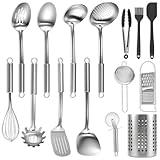
- Comprehensive sets (20+ pieces): include graters, peelers, measuring spoons/cups, scissors and speciality gadgets. Best if you want a ready-made, giftable kit.
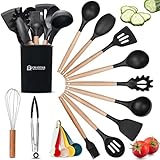
- Material mixes: all-metal (durable, looks smart), metal handles with silicone or nylon heads (gentle on non-stick pans), and mostly silicone/nylon (cheap, heat limits).
Important features, where to buy and mistakes to avoid
- Material and build: prefer high-quality stainless steel or single-piece moulded designs to avoid gaps that trap food. Look for anti-corrosion and BPA-free plastics where present.
- Heat resistance: check head materials. Silicone commonly withstands up to about 230°C, nylon around 210°C. Metal is best for high heat but can damage non-stick surfaces.
- Dishwasher safe: verify which parts are dishwasher-safe. Some sets include silicone pieces that need handwashing for longevity.
- Storage and ergonomics: look for a holder with drainage holes, hanging holes on utensils and ergonomic handles for comfort.
- Where to buy: online offers better price comparison, user reviews and images. Retail stores allow you to feel weight and finish firsthand. Buy online if you check recent reviews, seller returns and shipping times.
- Common mistakes to avoid: buying the largest set thinking it is better, choosing metal heads for non-stick pans, ignoring care labels (dishwasher vs handwash), and overlooking storage needs which often causes clutter.

Final Thoughts
Choose a set that matches how you cook: a compact set for basics, a mid-size set for most households, or a larger comprehensive kit if you want every gadget. Prioritise material quality, heat resistance and storage. When shopping online, read recent reviews and check return policies. If unsure, test one or two essential tools in-store to judge weight and feel before committing to a full set.