


Buying Guide
How to Buy Stand Mixers
This quick guide helps you choose a stand mixer that fits your cooking style and kitchen. It covers the things to weigh up, the common types, the key features to check and practical buying tips so you can act fast and confidently.
Key factors to consider
Think about what you make most and how often. Capacity, motor strength, and build quality determine performance and longevity.
- Capacity: small bowls suit occasional baking, 4.8 litre to 6.9 litre bowls handle family batches and heavier doughs.
- Motor power: stronger motors (for example around 300W and above) cope with dense doughs and continuous use.
- Design type: tilt-head models are easier to load and take up less space; bowl-lift models lock the bowl for very heavy mixing.
- Durability: full metal construction and metal gears last longer than plastic parts.
- Space and weight: check footprint and weight if you plan to leave the machine on the counter or store it away.
- Aftercare: warranty length and availability of spare parts or service are important for a long-term purchase.


Types available
Stand mixers generally fall into three usable categories. Keep this simple and match type to use.
- Compact tilt-head: ideal for home bakers who want a smaller footprint and easy access for attachments.
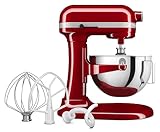
- Bowl-lift heavy duty: designed for frequent, large or heavy-duty mixing tasks and offers a more stable bowl lock for big batches.
- Commercial style: higher capacity and power for catering or very large households; expect a higher price and larger size.
Important features and specifications to look for
Check these specifics before you buy. They directly affect performance and day to day convenience.
- Speed range: look for a broad range (many have 10 or 11 speeds) including a low folding speed and high whisking speed.
- Planetary mixing action: ensures thorough ingredient incorporation from all angles.
- Accessories included: a whisk, flat beater and dough hook are standard; a flex edge beater or pouring shield adds convenience.
- Bowl material and extras: stainless steel bowls are common; some models include additional bowls or special finishes.
- Safety features: thermal cut-out or soft start help protect the motor and reduce splatter.
- Warranty and support: sample products show warranties up to five years; longer warranty gives extra peace of mind.
- Price and value: in the examples reviewed, prices ranged roughly from £450 to £810; decide which features you actually need before stretching the budget.

Where to buy, common mistakes to avoid and expert tips
Online shops offer wide choice and often better prices, while retail stores let you see build quality and size in person. Consider stock and delivery times if you need the mixer quickly.
- Common mistakes to avoid: buying on looks alone, underestimating capacity, ignoring motor power, assuming all accessories fit across brands, and overlooking warranty or service options.
- Expert tips: choose bowl-lift for heavy doughs and larger batches, choose tilt-head for ease of use and smaller kitchens; prioritise metal gears and thermal protection for frequent use.
- Check included accessories so you do not have to buy extras straight away, and confirm spare-part availability.
- If buying online, read recent customer reviews for real-world reliability and check exact dimensions against your worktop space.
Final Thoughts
Pick the type that matches how you bake, focus on capacity and motor strength over colour, and check included accessories and warranty. If you need heavy or frequent use, invest in a bowl-lift or heavy-duty model; for occasional home baking a tilt-head with a 4.8 litre bowl will usually be enough.