




Buying Guide
How to Buy a Detail Sander
This short guide explains what to look for when buying a detail or mouse sander. It covers the main factors to weigh up, the common types you will see, the key specifications to check, where to buy and practical tips to avoid costly mistakes.
What to consider before you buy
Decide how and where you will use the sander and match the tool to the job. Consider:
- Power source: do you need cordless convenience for tight spots, or corded power for long continuous work?
- Work intensity: light trimming and finishing needs less power than stripping paint or smoothing large areas.
- Dust control: good collection keeps your workspace clean and protects the motor.
- Comfort and control: compact size, rubber grips and low vibration make one-handed work easier.
- Accessories and spares: check whether sandpaper, batteries and chargers are included and how easy it is to buy replacements.


Types and categories
You will mainly find a few common styles:
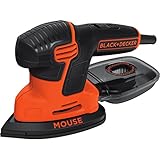
- Mouse or detail sanders: small triangular pads for tight corners and detailed work.
- Random-orbit multi-sanders: round pads for faster, more even sanding on larger flat surfaces.
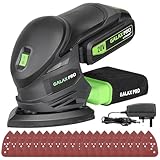
- Cordless models: offer mobility and usually include a battery and charger in kit packs.
- Corded models: simpler and often cheaper for steady, uninterrupted sanding sessions.
Important features, specs and where to buy
Key specs to check before you commit:
- Motor power or voltage: higher wattage or higher voltage gives faster material removal; typical cordless kits use 20V and corded entry-level units sit around 100W to 220W.
- Speed and stroke: look for around 12,000 to 13,000 oscillations per minute for efficient sanding; oscillation width of about 1 to 1.6 mm is common for detail work.
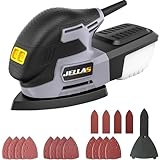
- Pad system: hook-and-loop pads make paper changes quick; triangular or finger attachments help reach awkward spots.
- Dust extraction: internal canisters, dust bags or vacuum ports vary in efficiency; a dust-sealed switch or vents help protect the motor.
- Included kit items: count included sandpapers and batteries; a spare battery or a 2.0Ah pack can double run time.
- Online shops offer the widest choice and often include full kit photos and customer reviews. Check the product listing for exact inclusions, battery capacity and warranty terms.
- High street retailers let you handle the tool before buying, which is useful to test grip and weight. Bring a sample sanding pad or ask about compatible consumables.
Common mistakes to avoid and expert tips
Avoid these pitfalls and follow a few practical tips:
- Do not buy on price alone. Cheaper tools may lack effective dust control, durable motors or spare parts availability.
- Check whether batteries and chargers are included before assuming they are part of the kit.
- Match grit to task: start coarse to remove material, then work up through finer grits for a smooth finish.
- Do not press hard on the pad. Let the sander do the work to avoid pad wear and motor strain.
- Prefer a tool with dust sealing and a reliable collection system if you will work indoors often.
- Buy extra sanding sheets and a case if you plan to travel with the tool. For frequent work, choose a higher wattage corded unit or a cordless kit with a 2.0Ah battery or higher.
Final Thoughts
Pick the sander that matches your typical jobs: choose cordless kits for accessibility and small jobs, corded models for continuous power and heavier work. Prioritise dust control, a comfortable grip and a pad system that accepts easy-to-replace sandpaper. Check what is included in the kit and opt for retailers with clear return and warranty terms so you can test the tool without risk.


