


Buying Guide
How to Buy a Caulking Gun
This short guide explains what to look for when choosing a caulking gun, compares the main types and highlights the practical features that make everyday sealing jobs quicker, neater and less tiring.
Key factors to consider
Think about what you will use the gun for and how often. For occasional DIY, a simple manual gun may be enough; for frequent or large jobs, a powered gun saves time and wrist strain.
- Application - internal trimming and bathrooms need precision; windows and construction need higher force and continuous flow.
- Power source - manual, battery or battery-free mechanical high-ratio. Batteries give continuous flow and speed but add weight and maintenance.
- Cartridge compatibility - standard 10oz / 310ml cartridges are the norm; check compatibility if you use sausage packs or specialist cartridges.
- Ergonomics and weight - lighter units are easier to use overhead or in tight spaces; look for comfortable grips and balanced designs.


Types available
There are four practical categories to know.
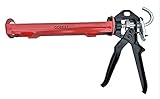
- Manual ratchet/plunger guns - reliable and cheap, best for occasional use and lighter sealants.
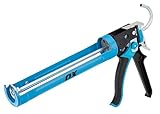
- High-ratio manual guns - 12:1 up to 26:1 thrust ratios; suited to high-viscosity adhesives and heavy use.
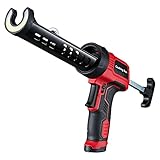
- Cordless electric guns - battery powered with constant-flow and no-drip systems; ideal for long jobs and professional results.
- Compact short-frame guns - small, lightweight designs for tight spaces and fine detail work.
Important features and specs to check
Match features to the tasks you plan to do.
- Thrust and ratio - look for around 250 kg to 400 kg thrust or stated ratios like 12:1 and 26:1 for thicker materials.
- Power and runtime - cordless models often quote runtimes of around 180 minutes; battery type matters (rechargeable Li-ion cells or replaceable AA options).
- Flow control - multi-speed settings or constant-flow tech let you control bead thickness; variable speeds are useful for different sealants.
- No-drip and auto-retract - prevents unwanted oozing when you release the trigger for a neater finish.
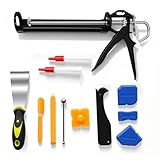
- Accessories - built-in puncture tools, rotatable barrels and LED lights are small extras that save time on site.
- Materials and durability - steel frames for heavy use, ABS for lightweight convenience; check heat-treated parts and warranty periods.
Where to buy, common mistakes and expert tips
Decide between online and in-store based on confidence and urgency.
- Online - best for price comparison, user reviews and a wide selection; check delivery times, returns and warranty details before buying.
- In-store - useful if you want to feel the weight and handle, and to get immediate advice or swap accessories.
- Buying the wrong type for the job - do not buy a lightweight compact gun if you need high thrust for construction adhesives.
- Ignoring cartridge size - not all guns suit sausage packs or paper tubes.
- Overlooking drip control - skipping no-drip or auto-retract features leads to messy work and wasted sealant.
- Buying purely on price - very cheap units can lack durability or useful extras like puncture pins or rotatable barrels.
- If you seal often, choose a cordless electric gun with adjustable speed and a no-drip mechanism.
- Keep a spare battery or carry AA cells if you use battery-powered models in remote sites.
- Use the right nozzle size and move at a steady pace for a smooth bead; finish with a tooling tool or finger run with a smoothing product.
- Clean immediately after use and store with the plunger retracted to prolong life.
Final Thoughts
Choose the type that matches your workload: manual for light occasional work, high-ratio manual for thick adhesives, and cordless electric for speed and comfort on larger jobs. Prioritise cartridge compatibility, drip control and build quality, and buy from a retailer that offers clear returns and warranty support.