



Buying Guide
How to Buy a Desk File Organiser
This short guide helps you pick a practical desk file organiser. It focuses on the most relevant factors, the main styles you will find, key specifications to check, and where to buy so you can act quickly and confidently.
Key factors to consider
Measure your desk and typical paper load before you buy.
Check compatibility with A4 and letter paper: many organisers here are designed for A4 and have tray spacings around 6.8 cm, which suits loose paper and thin files. If you stack thick folders, look for larger tray spacing.
Think about footprint and height: typical units in this selection are about 32 to 36 cm wide, 23 to 29 cm deep and 28 to 35 cm high. Make sure the depth fits your desk and the height will not block shelves or monitors.
Material and durability matter: metal mesh with reinforced bars and a powder coated finish is common and durable. Confirm the presence of reinforcing bars or solid frames if you plan to hold heavier loads.
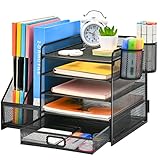
Utility and layout: decide whether you need multiple sliding trays, a vertical magazine/file rack, a small drawer and pen holders. Multi-function units save space by combining horizontal and vertical storage.
Check compatibility with A4 and letter paper: many organisers here are designed for A4 and have tray spacings around 6.8 cm, which suits loose paper and thin files. If you stack thick folders, look for larger tray spacing.
Think about footprint and height: typical units in this selection are about 32 to 36 cm wide, 23 to 29 cm deep and 28 to 35 cm high. Make sure the depth fits your desk and the height will not block shelves or monitors.
Material and durability matter: metal mesh with reinforced bars and a powder coated finish is common and durable. Confirm the presence of reinforcing bars or solid frames if you plan to hold heavier loads.
Utility and layout: decide whether you need multiple sliding trays, a vertical magazine/file rack, a small drawer and pen holders. Multi-function units save space by combining horizontal and vertical storage.


Types and who they suit
- Stacking letter trays only - best if you mainly sort sheets and want a low-cost solution.
- Multi-tier units with vertical file rack - ideal if you mix flat paper trays with upright folders and magazines.
- Units with a small drawer and pen holders - good if you need a place for small supplies like clips, staples and pens.
- Modular or expandable systems - suited to flexible workspaces where needs change regularly.
Choose a compact 3 to 5 tier organiser for home workers and students. Pick a reinforced metal mesh design with both trays and a vertical rack for office professionals who manage both loose documents and bound folders.
Important features and specifications to check
- Dimensions - confirm width, depth and height against your desk space. Example ranges from these products: width 32-36 cm, depth 23-29 cm, height 28-35 cm.
- Tray count and spacing - 3 to 5 trays are common; spacing around 6.8 cm suits loose paper but not deep folders.
- Vertical file capacity - look for dedicated magazine racks or upright slots if you store folders or magazines.
- Extra storage - sliding drawer and pen holders add convenience for office supplies.
- Material and finish - metal mesh with reinforcement bars and powder coat finish resists bending and rust better than thin wire or untreated metal.
- Assembly time and tools - many units assemble in 10 to 15 minutes and include simple tools; check reviews for difficult assembly reports.
- Stability and feet - rubber feet or anti-slip pads prevent movement and protect surfaces.
- Price and warranty - expect about £20 to £33 for complete multi-function organisers; confirm return policies and any warranty.

Where to buy, common mistakes and quick expert tips
Online retailers offer the widest selection and often free delivery, which makes comparing dimensions and features easy. High street stores let you inspect build quality but selection may be limited.
Common mistakes to avoid:
Expert tips:
Common mistakes to avoid:
- Buying without measuring your desk or checking tray spacing.
- Choosing the cheapest unit without checking reinforcement or finish quality.
- Forgetting to factor in assembly time and the need for tools.
- Overlooking stability - tall, narrow organisers can tip when overloaded.
Expert tips:
- Prefer metal mesh with reinforced bars and a powder coat finish for lasting use.
- If you need both documents and magazines, pick a model that combines horizontal trays with a vertical rack and a small drawer for supplies.
- Check product images and listing dimensions closely; look for mention of tray spacing if you store thick folders.
- Buy from sellers that offer a clear returns window and at least a short satisfaction guarantee so you can test fit on your desk.
Final Thoughts
Measure your space, choose a multi-function organiser with metal construction and reinforced framing, confirm tray spacing for your document types, and prefer units with a drawer and vertical rack for maximum versatility. Expect to spend roughly £20 to £33 for a well equipped unit and order from a retailer that offers clear dimensions and a returns policy.


