




Buying Guide
How to Buy a Portable Air Conditioner
This short guide helps you choose the right portable air conditioner fast. It covers the main factors to check, the common product types, key specifications to compare and practical advice on where to buy and what to avoid. Use it to make a confident, quick purchase.
Key factors to consider
Measure the room first - length x width gives you the area in square metres. Match the unit's stated coverage to your room and leave a little headroom for very sunny or poorly insulated rooms. Consider these quick checks:
- Cooling power and coverage - units in this range typically cover from about 20 m² up to 60 m² depending on capacity.
- Noise level - bedroom-friendly units can operate from about 48 dB; others may reach the mid-50s dB, which is noticeable at night.
- Energy use - look for energy ratings and the kW input to estimate running cost. A-rated units will cost less to run.
- Venting and installation - decide if you can use an exhaust hose and window kit or need a ductless personal cooler that does not vent outside.
- Dehumidification - if you have humidity problems, check litres per day performance; some units remove up to around 50 litres/day.


Types available
Know which type suits your needs before you shop:
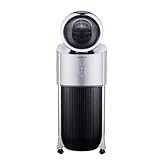
- Personal ductless coolers - direct the airflow at a person rather than cooling the whole room. Good for desks or immediate personal comfort and do not need an exhaust hose.
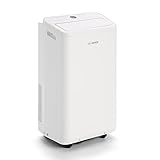
- Single-hose portable ACs - common, simple to install with a window exhaust kit. Effective for most rooms but less efficient than dual-hose designs.
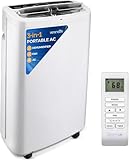
- Multi-function units - 3-in-1, 4-in-1 or 5-in-1 models combine cooling, fan, dehumidifier and sometimes air purification. Choose these if you want year-round versatility.
Important features and specs to look for
Compare the small print to avoid surprises:
- Capacity - check BTU or kW and the manufacturer’s stated m² coverage. If in doubt, size up one category for very hot rooms.
- Noise - choose under about 52 dB for bedrooms; look for a quoted night or sleep mode.
- Energy and refrigerant - prefer A-rated appliances and eco refrigerants such as R290 where available to save on running costs and reduce environmental impact.
- Dehumidifier rating - litres per day if moisture control is important.
- Controls and timers - remote, 24-hour timer, app control and child lock add convenience.
- Installation and mobility - check the included window kit type (horizontal or vertical), the exhaust hose length, built-in handles and smooth casters.
- Maintenance - washable filters, easy-access panels and a water-full indicator or drain option make upkeep simple.

Where to buy, common mistakes to avoid and expert tips
Online shopping gives selection and often better prices but check stock levels and delivery lead times before committing. In-store buying lets you hear the noise and get immediate pickup. Avoid these common mistakes and follow a few quick tips:
- Mistakes to avoid - buying on price alone, undersizing for your room, ignoring venting needs or window-kit compatibility, and forgetting to factor running costs and noise into your decision.
- Expert tips - pick an A-rated model with a quiet sleep mode if used in bedrooms, choose a unit with easy-to-clean filters and a clear condensate solution, and ensure the window kit fits your window type. If you only need a cool breeze at a desk, consider a ductless personal cooler rather than a full-room portable AC.
- Before you buy - check warranty and returns policy, confirm delivery windows, and if you need it quickly avoid products with long dispatch delays.
Final Thoughts
Choose a unit sized for your room, prioritise quiet operation and energy efficiency, and check venting and maintenance requirements before you buy. Match the type to how you will use it - personal direct cooling for one person, or a vented portable unit for whole-room comfort - and you will be comfortable all summer with minimal hassle.

