


Buying Guide
How to Buy Toddler Toys and First-Ride Toys
A quick guide to choosing safe, engaging and developmentally useful toys for babies and toddlers aged roughly 6 months to 3 years. This covers the factors that matter, the common types you will find, the key features to check and practical buying advice so you can decide quickly and confidently.
Key factors to consider
Age and stage: choose toys labelled for the child’s current developmental stage, not just their age. Toys that encourage crawling, pulling up, first steps and simple problem solving work best for 6 to 36 months.
Safety first: look for smooth, burr free plastics, non toxic materials and parts too large to be swallowed. Check maximum weight limits for rideable toys and that moving parts are protected.
Durability and maintenance: toddlers test toys hard. Prefer sturdy construction, quiet EVA or rubber wheels for indoor use, and easy to wipe clean surfaces.
Battery needs: battery free, friction or pull back mechanisms reduce running costs and are often better for very young children. If the toy has lights or music, check battery type and access to the battery compartment for secure fastening.
Safety first: look for smooth, burr free plastics, non toxic materials and parts too large to be swallowed. Check maximum weight limits for rideable toys and that moving parts are protected.
Durability and maintenance: toddlers test toys hard. Prefer sturdy construction, quiet EVA or rubber wheels for indoor use, and easy to wipe clean surfaces.
Battery needs: battery free, friction or pull back mechanisms reduce running costs and are often better for very young children. If the toy has lights or music, check battery type and access to the battery compartment for secure fastening.


Types and important features
- Push along and pull along toys: Good for first steps and balance. Look for wide stable bases and features that reward walking, such as popping balls or rolling animals.
- Friction and pull-back cars: Battery free, simple to use and great for chasing and tracking skills. Check for smooth edges and that tiny decorative pieces are fixed securely.
- Interactive music and light toys: Stimulate hearing and cause and effect learning. Prefer toys with volume control or selectable sound levels and robust on/off controls to avoid constant noise.
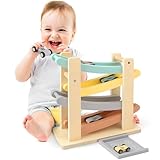
- Track and ramp playsets: Promote hand-eye coordination and sequencing. Opt for easy assembly, chunky pieces for little hands, and secure connections.
- Balance and ride-on toys: For toddlers learning balance and coordination. Key features are adjustable seat height, a steering limiter to prevent tipping, a stable wheelbase (three or four wheels for beginners) and a clear maximum weight rating.
Where to buy and quick buying tips
Online shopping benefits: wider selection, quick price comparisons and user reviews that show real-world durability and safety. Check delivery times and return policies before buying.
In-store benefits: let your child try handling the toy, check finishes and feel the weight and stability of ride-ons. Staff can sometimes point out assembly and storage details.
Practical tips:
In-store benefits: let your child try handling the toy, check finishes and feel the weight and stability of ride-ons. Staff can sometimes point out assembly and storage details.
Practical tips:
- Read reviews that mention long term wear, loose parts or loud speakers.
- Compare prices but remember very low prices can mean thin plastic or missing safety features.
- For ride-on items verify assembly is tool free if you want a quick setup, and confirm seat adjustability actually clicks into place.
- Keep receipts and note warranty details for any mechanical or electrical faults.

Common mistakes to avoid and expert recommendations
Buying up: avoid choosing toys that are labelled far above the child’s current stage; they may frustrate rather than help.
Overlooking small parts: always check that decorations and batteries are secured behind a screw fastened compartment.
Ignoring sound levels: continuous loud music can be distressing. Prefer toys with off switches or volume settings.
Expert picks: choose a mix of battery free toys and a couple of interactive items with volume control; favour ride-on toys with adjustable seats and a steering limiter for early balance work; pick one toy that encourages problem solving such as simple assembly or shape recognition.
Budget note: well designed simple toys often provide the most developmental value for the least money.
Overlooking small parts: always check that decorations and batteries are secured behind a screw fastened compartment.
Ignoring sound levels: continuous loud music can be distressing. Prefer toys with off switches or volume settings.
Expert picks: choose a mix of battery free toys and a couple of interactive items with volume control; favour ride-on toys with adjustable seats and a steering limiter for early balance work; pick one toy that encourages problem solving such as simple assembly or shape recognition.
Budget note: well designed simple toys often provide the most developmental value for the least money.
Final Thoughts
Keep choices simple, safe and stage appropriate. Aim for a balance of movement toys, quiet manipulative toys and one light interactive item. Inspect materials, check reviews for durability and pick easy return options when buying online. Small, well chosen toys will encourage movement, coordination and confident play.