



Buying Guide
How to Buy Kids' Outdoor and STEM Toys
A short, practical guide to choosing active toys, foam gliders, archery sets and beginner science kits for young children. Use this to match age, play space and learning goals so you buy faster and smarter.
Key factors to consider
Match the toy to the child, not to an idea of fun.
- Age and developmental stage - check the recommended age and whether the toy supports fine motor skills, coordination or basic science concepts.
- Play location - indoor toys should be soft and low-mess; outdoor toys should be durable and weather tolerant.
- Safety and materials - look for soft foam or EPP material for flying toys and suction or foam tips for projectiles to avoid injury.
- Supervision and complexity - some science kits advertise 50+ experiments but may need adult help; check whether instructions are illustrated and whether tools are reusable.
- Battery and lighting - LED lights add night play value but factor in battery type and replacement cost.
- Price and value - many good sets sit in the low- to mid-teens (GBP range), so prioritise included accessories and the number of play hours.


Types and where each fits best
Quick guide to the main categories and when to pick them
- Beginner science kits - best for curious 4+ children who enjoy hands-on learning; choose kits with clear manuals and non-toxic supplies.
- Archery and suction-cup sets - great for coordination indoors or in the garden; check arrow design and target stability.
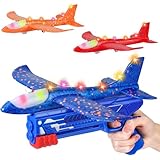
- Foam gliders and launcher planes - ideal for outdoor play and group competition; expect flight of roughly 10-15 metres (33-49 ft) depending on launcher and wind.
- Construction and STEM building sets - suited to 5+ for open-ended creativity and longer-term engagement; look for 50-100+ pieces and included tools for assembly and storage box for parts.
Important features, common mistakes and expert tips
Key specifications to check
- Materials - soft, flexible foam or certified non-toxic plastics; avoid brittle parts for outdoor use.
- Piece count and accessories - more pieces can mean more play modes but also more tidying; check if there is a storage box and assembly tools.
- Instructions - prefer illustrated, step-by-step guides for independent play.
- Performance - for flyers check stated distance and whether tail fins give two flight modes (straight or circular).
- Lighting and batteries - if LEDs are included, confirm the battery type and whether they are pre-installed.
- Buying for novelty alone - toys without a clear purpose become unused quickly.
- Ignoring age warnings - small parts are a choking risk for younger children.
- Assuming all foam is the same - higher quality foam is more durable and safer near faces and eyes.
- Overlooking running costs - batteries and replaceable consumables add up.
- Online marketplaces - good for price comparison, user reviews and quick delivery; check seller ratings and return policy.
- High street retailers - useful if you want to inspect materials and test grips before buying.
- Check product pages for free shipping and bundled savings if you want several types at once.
- Read a handful of recent reviews to spot recurring issues like poor instructions or fragile parts.
- Choose one active outdoor toy and one indoor/STEM toy to balance screen-free time.
- If you want night play pick LED-equipped models with replaceable batteries.
- For learning value select science kits with 30+ experiments and reusable tools.
- Keep a small first-aid kit and set clear play boundaries for projectile toys.

Final Thoughts
Buy to the child and the space. Prioritise age-appropriate safety, clear instructions and durable materials. Combine one outdoor flyer or archery set with a STEM or building kit for varied, longer-lasting play. Check reviews, returns and whether batteries or extra consumables are needed before you complete the purchase.


